Tiling costs in London (2026): bathrooms, kitchens, floors and what moves the price
What tilers charge in London per m², what a full bathroom retile or kitchen splashback really costs, and why preparation — not the tile — decides the price.
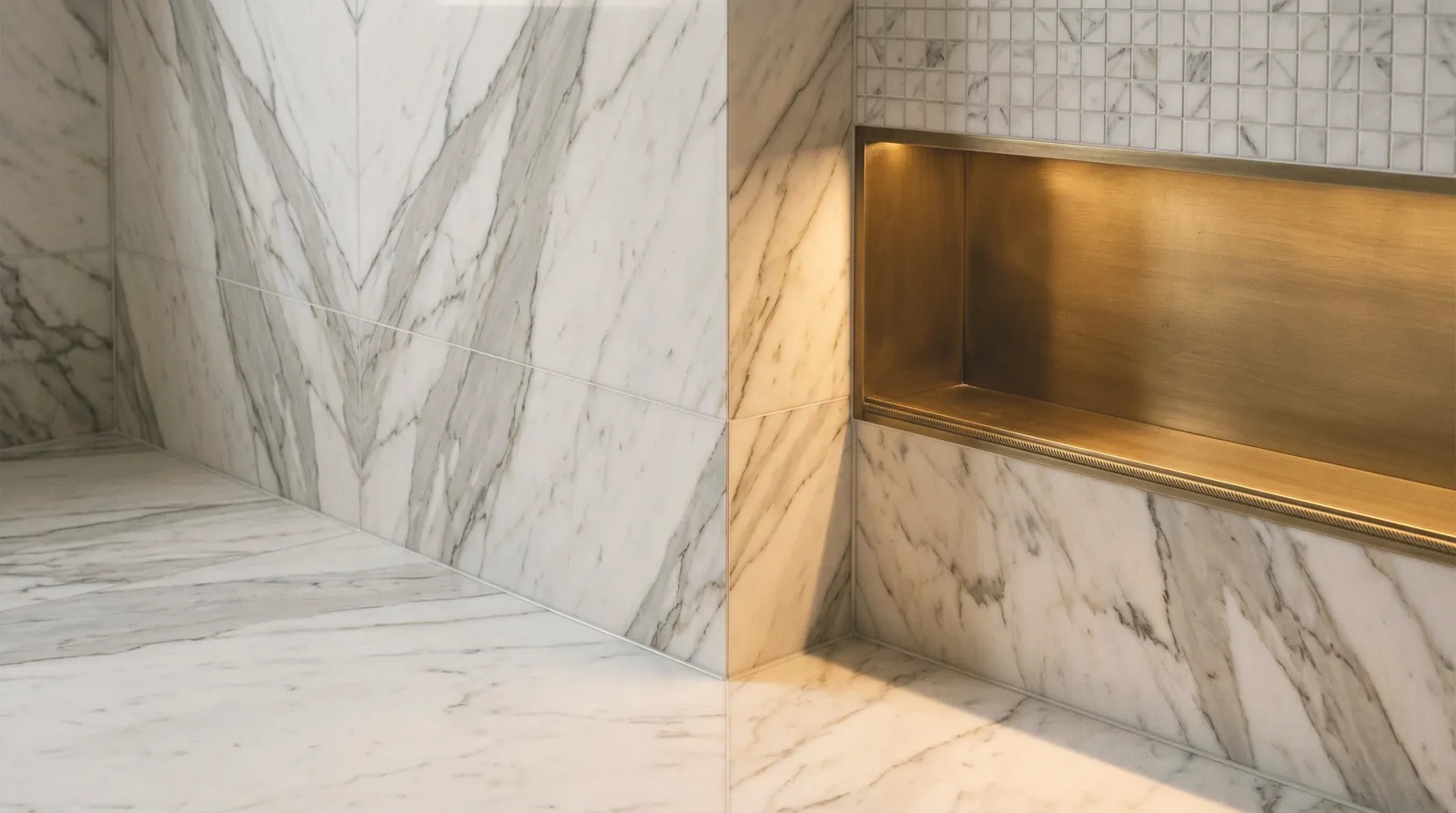
Tiling is one of those trades where the quote spread in London is enormous — the same bathroom can come back at three very different numbers — and the difference is almost never the tiling itself. It is what each tiler has decided to do, or quietly not do, about everything underneath. This guide sets out typical 2026 London rates for walls, floors, bathrooms and kitchens, and then explains the part that actually decides your price: preparation, waterproofing and setting-out.
Typical London tiling rates in 2026
As working market figures for Greater London:
- Standard wall tiling (ceramic or porcelain, straight set): around £45–£75 per m² labour.
- Floor tiling: around £55–£95 per m² labour, reflecting levelling and the stronger adhesive bed floors need.
- Large-format tiles (600mm+), natural stone and mosaics: above those bands — bigger tiles need flatter substrates and two pairs of hands; stone needs sealing and more careful handling; mosaic is slow by nature.
- Patterned layouts — herringbone, chevron, basketweave — add time because every course is cut and checked against the setting-out.
Tiles are priced separately, and the spread there is wider than the labour: a serviceable porcelain can cost a few tens of pounds per square metre, and a natural stone or handmade tile several times that. Adhesives, primers, trims, grout and silicone are real money on a whole room and belong on the quote as their own lines — on ours, they are.
What a bathroom retile really costs
A typical London bathroom carries somewhere between 20 and 35 m² of tiled surface once walls and floor are counted. Retiling it properly — strip the old finish, make good and re-board where the walls need it, tank the wet zones, then set out and tile — generally runs around £2,000–£4,500 in labour plus the tiles and materials.
Two honest notes on that number. First, stripping often reveals the real job: blown plaster, old leaks, walls that were never flat. Pricing that after opening up, line by line, beats a low quote that meets "unforeseen issues" in week one. Second, if the bathroom is tired enough to retile, it is usually tired enough to renovate — and as part of a full bathroom renovation the tiling folds into one programme with the plumbing and waterproofing sequenced correctly. A standard London refit usually lands at £11,000–£22,000 all-in; the bathroom cost guide breaks that down, and a wet room changes the tiling spec more than any other single decision, because the floor becomes part of the waterproofing system.
Kitchens: splashbacks and floors
A straightforward kitchen splashback — the run between worktop and wall units — is a small job at around £350–£800 in labour depending on length, cut-outs for sockets and the tile chosen. Full-height feature walls and window reveals push it up. Kitchen floors behave like any other floor tiling, with one wrinkle worth planning for: appliance and plinth heights. Tiling under the units rather than up to them costs a little more in tile and reads as a detail nobody sees — but it means the dishwasher comes out without a demolition. We tile kitchen floors as part of kitchen renovations and standalone flooring work alike.
The part that decides the price: what's under the tile
Every tiling failure you have ever seen — drummy tiles, cracked grout lines, a corner that went mouldy — happened below the surface. This is where the money in a good quote goes:
- Substrate. Tile needs a rigid, flat, dry background. Old bathrooms usually need re-boarding with tile backer; floors often need levelling compound or, on timber, stiffening before a tile goes anywhere near them.
- Waterproofing. Grout is not waterproof. Wet zones — and the whole floor in a wet room — need a tanking system applied as a system, not a token coat of the corner behind the shower.
- Setting-out. The difference between a room that looks engineered and one that looks tiled is where the first tile goes: centred runs, no slivers at eye level, cuts pushed to the hidden edges. It costs an hour of thought and it is the most visible hour of the job.
- Movement. Buildings move; tile does not. Movement joints and the right adhesive class are why a floor is still tight in year ten.
When you compare quotes, compare these lines — not the per-m² headline.
Repair, or retile?
If the tiling is sound and the problem is a cracked tile, tired grout or failed silicone, a repair is a fraction of a retile: individual tiles can be cut out and replaced, grout raked and renewed, silicone stripped and re-run. Where the surface itself is worn but sound, refinishing can be smarter than replacement — the restore-first logic in our surface restoration cost guide applies to tiled rooms too. The honest test: if more than a few tiles have lost their bond, or water has been getting behind, patching is throwing good money after bad.
How PrimeCraft prices tiling
Tiling on our jobs is priced from a survey, not a photograph: we check the substrate, measure the true areas, agree the setting-out with you, and hand over an itemised quote the same day — preparation, waterproofing, labour, tiles and materials each on their own line. Tiling runs inside bathroom and kitchen projects, across flooring work, and as a standalone trade where that is all the room needs. If you want a first number before a visit, the online estimate takes a couple of minutes.