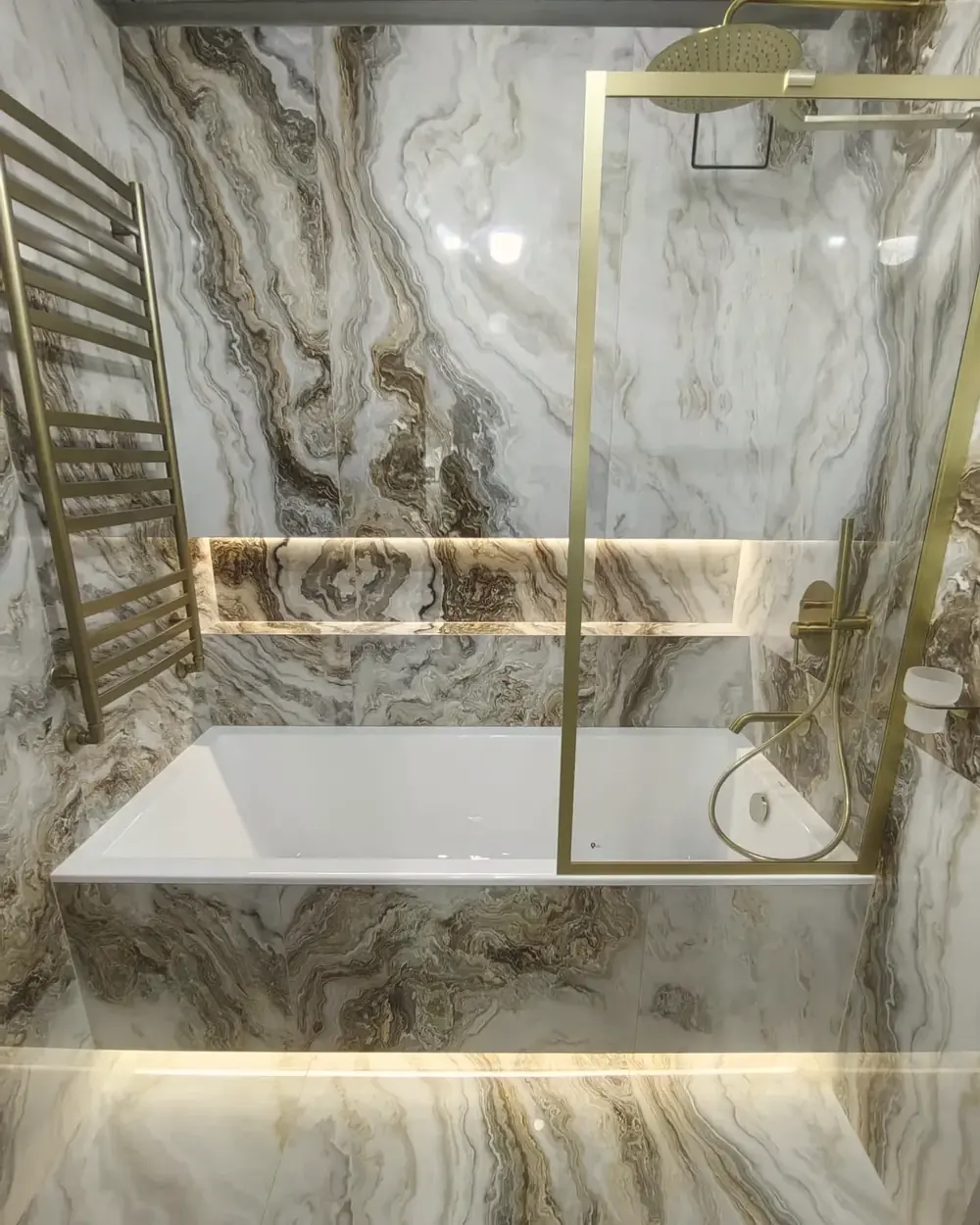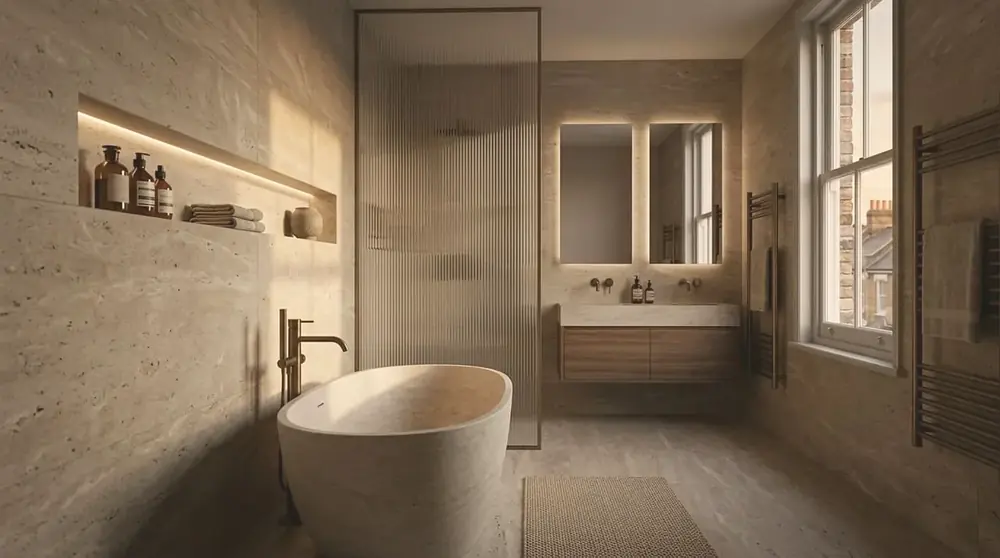
Bathroom renovation cost in London (2026): what actually moves your number
A London bathroom renovation runs about £11,000–£49,000+ in 2026. The five things that decide where you land, plus three fully priced briefs.
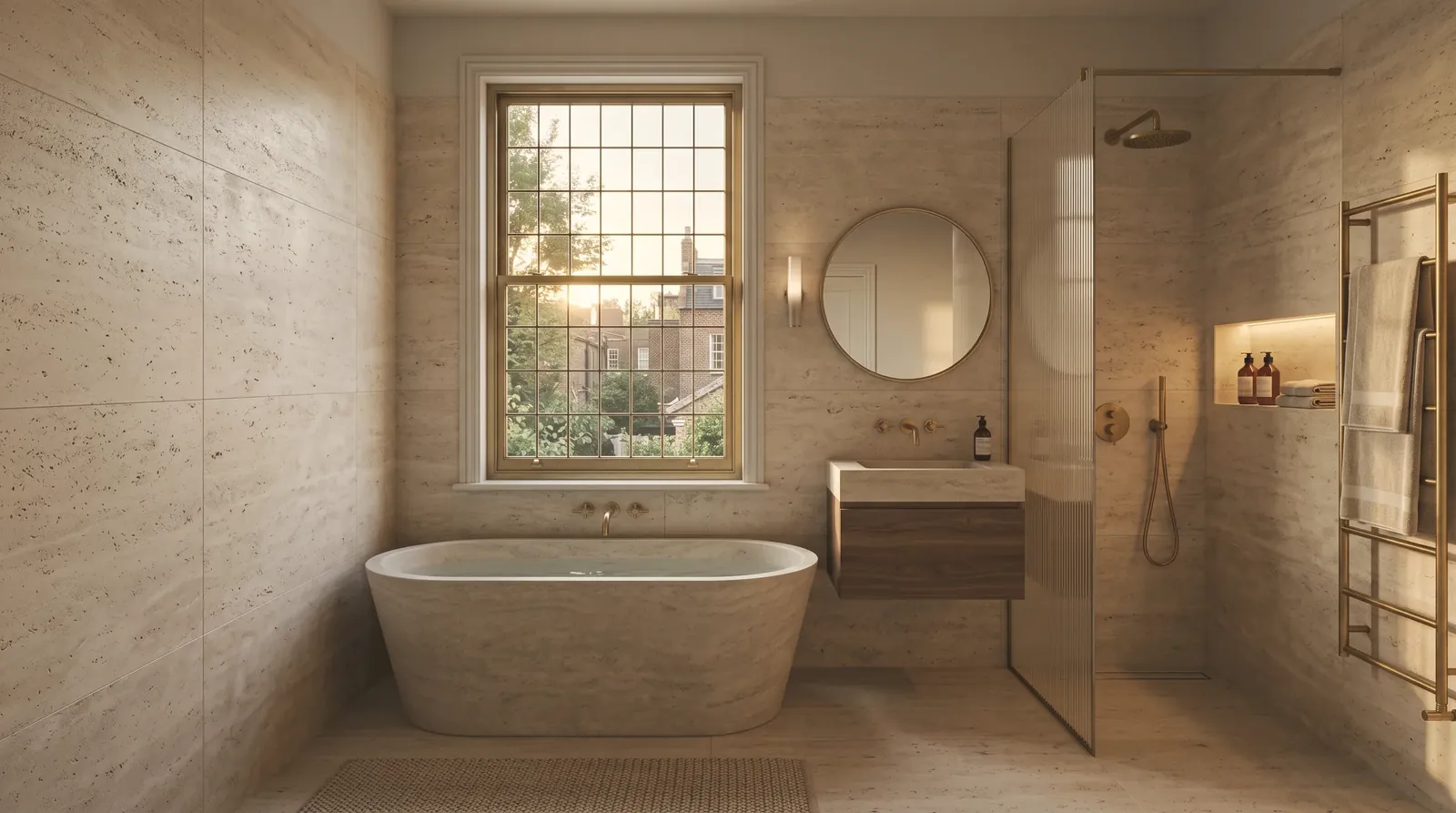
A bathroom renovation in London costs roughly £11,000 to £49,000+ in 2026, and the spread is that wide because "bathroom" can mean a tidy like-for-like swap or a re-planned, stone-lined wet room with underfloor heating. Rather than guess a tier, it helps to know what actually moves the figure: the size of the room, whether the layout shifts, the finish you choose, what an old London house hides behind the plaster, and how hard the access is. Get those five straight and you can predict your own number before anyone visits. This guide takes each in turn, prices three realistic briefs, and shows how the agreed figure holds to the end.
The five things that decide your price
Before any tier, these are the levers — roughly in the order they bite:
- Size. A 2.5 m² cloakroom and a 9 m² family bathroom use the same trades but very different quantities of tile, waterproofing and labour. Square metres set the floor of the budget.
- Does the layout move? Keeping the WC, basin and bath where they are is the single biggest saving. Move them and you're into new first-fix plumbing, fresh waste runs, and — if the WC shifts far from the stack — a real pipework job. Same room, very different price.
- The finish. Sanitaryware, brassware, tile and glass span an enormous range. A mainstream suite with ceramic tile is a fraction of a stone-tiled scheme with concealed cisterns and a frameless screen. This is where your money has the most freedom to move.
- What's behind the walls. In a period London house, stripping out turns up lead supply pipes, tired wiring, or joists that need doubling under a heavy bath. These aren't "extras" — they're the real condition of the room, and they belong in the budget from day one.
- Access and logistics. A second-floor flat with no lift, a narrow Victorian staircase, a skip licence and a parking suspension all add time and cost that a ground-floor house simply doesn't carry.
Three briefs, priced by what you change
Instead of abstract tiers, here are three jobs most London bathrooms fall into, priced for 2026:
- Refresh, same footprint — £11,000–£15,000. The suite is replaced where it stands, with new tiling, sealing, extraction and fittings. No pipework moves, no walls touched. The honest choice when the layout already works and you want it clean and current.
- Full strip-out, same layout — £15,000–£22,000. Everything comes back to the brick: the room is re-waterproofed, the supply and waste runs are renewed, fresh backer board goes up and a properly ducted extractor goes in. You keep the positions but replace everything hidden — which is exactly where a cheap job cuts.
- Reconfigured or wet room — £22,000–£33,000. The layout changes, a wall may move, and often the shower becomes a tanked, level-access zone draining to a single recessed channel. Surfaces step up to natural stone or wide porcelain. This is where most "dream bathroom" briefs sit.
- High-spec, design-led — £33,000–£49,000+. A freestanding bath, underfloor heating, concealed cisterns, made-to-measure cabinetry, specialist surfaces and a proper lighting scheme. The ceiling is your taste, not the building.
All four are London 2026, materials and labour, confirmed at survey.
Where a quote should be itemised
A figure you can trust is a figure you can read line by line. For a bathroom that means each of these priced on its own row: the strip-out, dust sheeting and skip; the first-fix plumbing; the first-fix electrics on RCD-protected circuits; the waterproofing; backer board behind the tiles; the tiling labour with its adhesive and grout; the sanitaryware and brassware listed by name, not as "fittings"; the second fix; the sealing; the end-of-job clean; and a return visit to snag. If any of those is folded silently into one figure, ask which row it lives in — because the items that disappear first tend to be the waterproofing and the extractor, and those are precisely the two that cause damage when they're thinned.
The costs an old London house adds
Period stock carries a handful of recurring surprises, and naming them up front is cheaper than meeting them mid-job:
- Lead supply pipes. A dull-grey incoming main that dents under a fingernail is lead; swapping the homeowner's side for copper or MDPE runs about £600–£1,500, and a bathroom strip-out is the sensible moment to do it.
- Joist reinforcement. A heavy bath — stone-resin or cast iron — or a screeded wet-room floor can need the joists doubled up underneath, which is a structural engineer's call rather than a guess.
- Extraction to outside. Mechanical extraction has to vent to the open air, not "into the loft." The old terminate-in-the-roof trick fails Building Regulations and rots the timber above.
- Soil-stack distance. Move the WC more than a metre or two from the stack and the waste run gets involved fast; on a wet room the floor build-up has to carry the fall as well.
- Asbestos. Pre-2000 ceilings, textured coatings and old tile adhesives can contain it; a refurbishment survey (£250–£600) settles it before the breaker comes out.
Wet room, walk-in or tray — the cost fork
The shower decision is the one that swings a mid-budget the most. A walk-in enclosure with a low-profile tray and a glass panel is the simpler, lower-risk build. A true wet room tanks the whole floor, falls it to a drain and loses the tray entirely — it reads as one seamless plane and frees up space in a small room, but every part of the waterproofing has to be right, especially in a flat sitting above someone else. Budget the tanking on its own row (£1,800–£3,500 for a full wet-room build, separate from the tile cost), because that membrane is what stands between a watertight floor and a five-figure ceiling repair downstairs. In a timber-floored loft, only build a wet room where an engineer has confirmed the floor won't flex — movement breaks the seal. A tanked shower zone inside an otherwise conventional bathroom is the middle path: most of the look, less of the risk.
How long you're without a bathroom
Honest durations for a single bathroom in London, 2026:
- Refresh, same footprint: 7–10 working days.
- Full strip-out, same layout: about 3–4 weeks.
- Reconfigured or design-led: 5–8 weeks, longer where made-to-measure joinery or natural stone is involved.
Two timing facts decide whether it runs long. Tanking and screed need their cure time before tiling — rushing it is a leak waiting to happen — and any stone or specialist tile has a lead time that has to be ordered before the strip-out, not during it. If it's your only bathroom, plan the gap: a sequenced job that keeps a working WC live for as much of the build as the layout allows is worth asking for.
How the agreed price stays put
A bathroom budget holds when two things are nailed down. First, every choice — the suite, the brassware, the tile, the glass, the heating — is selected and costed before the strip-out, because a mid-build change of mind is the most expensive way to renovate. Second, anything genuinely unforeseen behind the plaster comes to you with a price for sign-off before any of it goes ahead, rather than landing quietly on the final bill. That's how we run it: a quote broken to trade level that you can challenge row by row, dates fixed up front, and a single person carrying the job from the first measure to the last bead of sealant — so the number always has one clear owner.
Closing CTA
A bathroom can't be priced accurately over the phone — the floor area, the access, the state of the pipework and where the stack runs all change the figure. PrimeCraft Surface Solutions surveys the room, prices it to trade level, puts the dates in writing, and keeps one point of contact on the job from the survey to the final clean, working across Greater London and the neighbouring counties. Arrange a no-cost site visit, see what a PrimeCraft bathroom refit includes, or run your room through the online estimator for a first range to plan around.