Projects
Whole-home refurbishment
A flat or house taken from strip-out to finish, with structure and services done first and every room following in the right order. One coordinated job across Greater London and the Home Counties, priced and programmed as a single sequence.
- Full refurbishment
- Structure & services
- Bathrooms & kitchen
PrimeCraft Surface Solutions runs whole-home refurbishments across Greater London and the Home Counties — taking a flat or house completely apart and putting it back together in the right sequence, from structural and service work through to the last painted surface.
A whole-home refurbishment is not a sum of separate trades happening in parallel. The order matters: strip-out first, then any structural changes (steel beams, new openings, party-wall work), then the rewire and replumb so every cable and pipe sits in the right place before the walls close up. Plastering follows once the services pass inspection. Only then do rooms take shape — kitchen, bathrooms, flooring, carpentry, decoration — finishing in sequence rather than colliding in the same space on the same week.
Getting that order wrong is one of the main reasons renovations run over budget and over time. A kitchen fitter arriving before the first-fix electrician, or a plasterer finishing a room before the soil pipe is in position, means walls opened up again and days lost. A typical job of this kind is priced, programmed and managed as a single sequence so the phases hand off rather than crash into each other — the renovation timelines guide sets out how that ordering plays out week by week.
What a whole-home refurbishment typically covers
- Strip-out — remove the existing fit-out, linings and ceiling finishes; clear to structure and services
- Structural work — new or altered openings, steel beams, party-wall repairs; building regulations and structural sign-off handled
- Rewire — new consumer unit, circuits and sockets throughout
- Replumb — new supply and waste runs, radiator pipework, and a new boiler upgraded or relocated as the layout requires
- Wet-room waterproofing and first-fix — shower trays, bath positions, basin rough-in set before plastering
- Plastering — skim or full re-line, depending on condition of the substrate
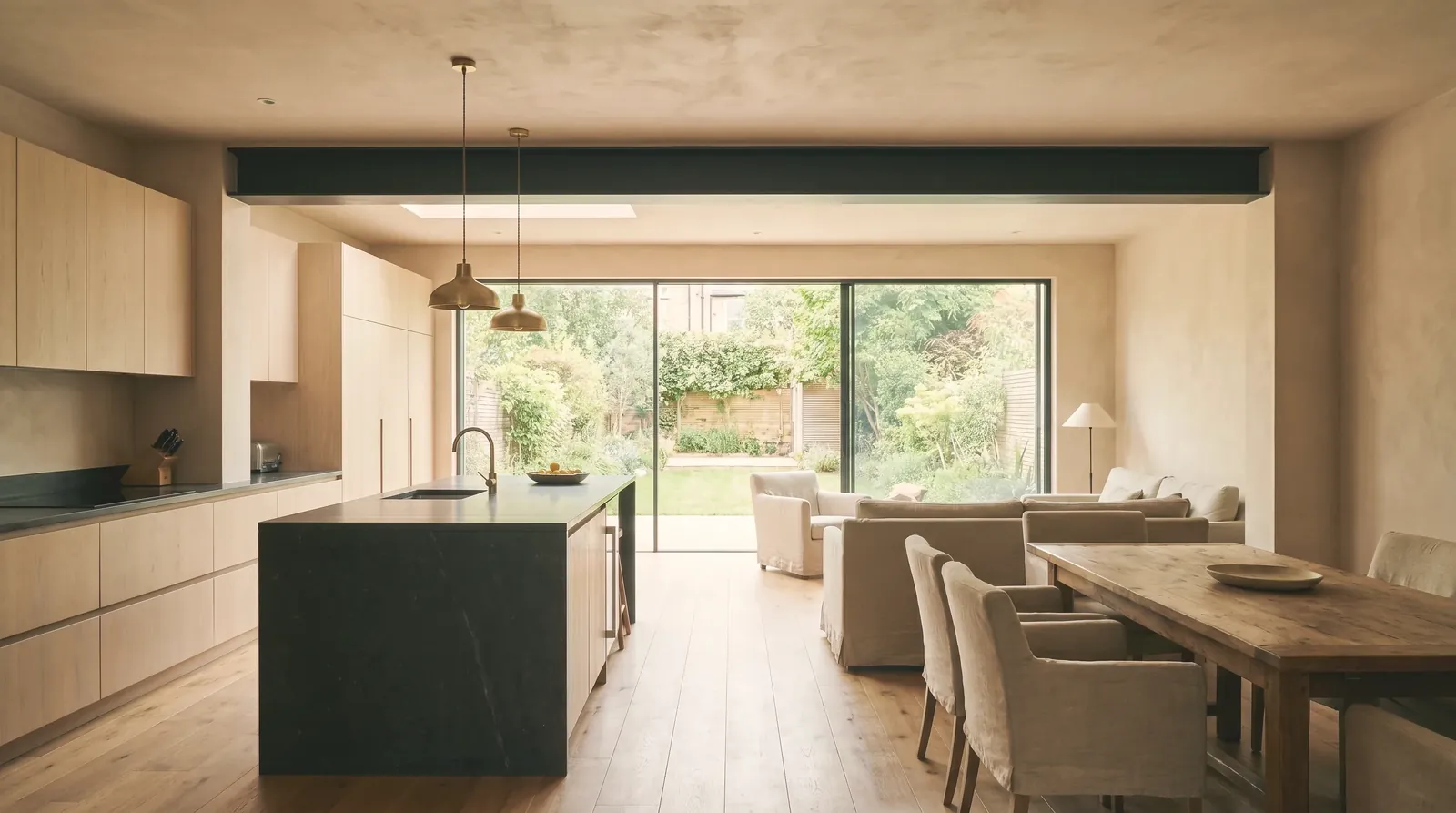
- Kitchen — fitted units, worktop, appliances, splashback, connected to the new services
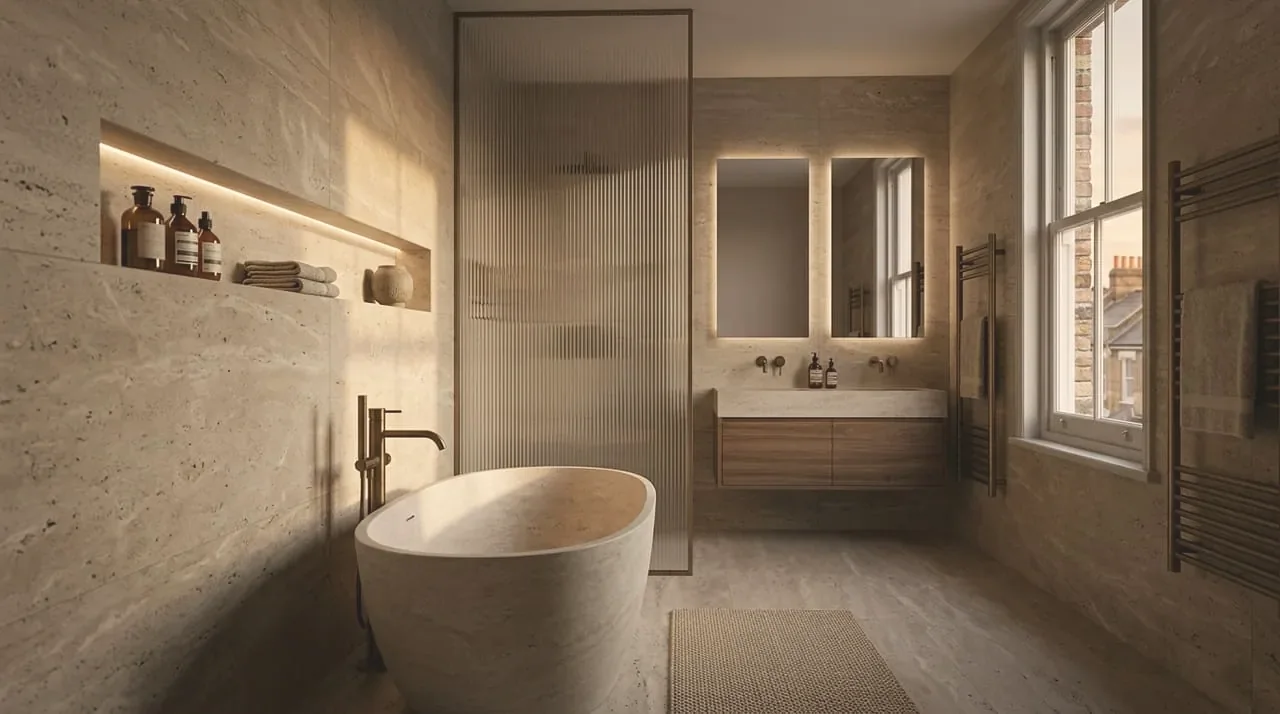
- Bathrooms — tiling, fixtures, underfloor heating where specified
- Flooring — engineered timber, stone or tile across the whole floor plate, laid after the wet trades finish
- Carpentry and storage — fitted wardrobes, alcove units, staircases, window seats as scoped
- Decoration — painting and finishing, one sweep per room at the end
Every one of those phases is a separate costed line in the quote, so you can see where the money is allocated before you commit.
What drives cost and time in London
Floor area is the main variable, but it is not the only one. A compact Victorian mid-terrace and a four-storey Georgian townhouse both call themselves a "whole-house renovation" — the price ranges are very different. The biggest cost levers are:
- Structural scope — how many walls move, whether a steel is needed, basement or loft work
- Services condition — a house with original lead plumbing and fused spur wiring costs more to strip and replace than one that was part-updated in the 2000s
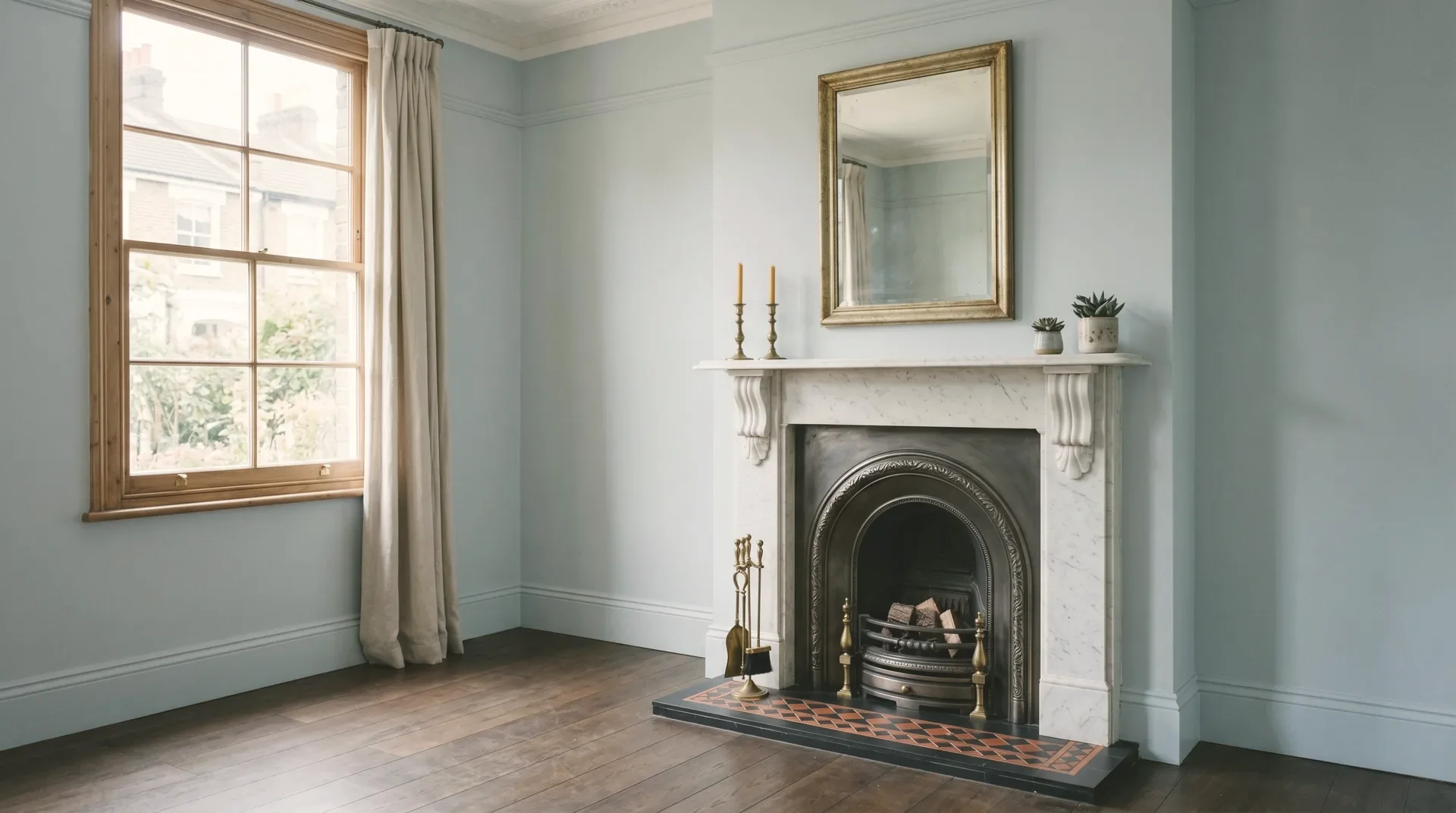
- Period fabric — restoring cornices, reinstating fireplaces and repairing original joinery on conservation-area stock adds time and cost, and is best priced as a named line rather than a contingency
- Spec of kitchens and bathrooms — the two rooms where the range between a functional finish and a high-specification finish is widest, and where scope creep is most likely to occur during a build
As a broad guide, a full refurbishment of a two- or three-bedroom London terrace (strip-out to decoration, including kitchen and bathrooms) typically runs £110,000–£250,000 depending on size, spec and structural scope; a larger four- or five-bedroom house, or a period property with significant restoration work, sits above that range. Those figures are market guidance for the type of work rather than a quote — the full house renovation cost guide breaks the numbers down room by room.
Where this work happens
Whole-home refurbishments run across inner and outer London and the Home Counties. The work is particularly common on:
- Victorian and Edwardian terraces in Hackney (E8, E9), Clapham (SW4), Battersea (SW11), Fulham (SW6) and Islington (N1, N5) — typically strip-out to new kitchen and bathrooms, with loft or rear extension work added to the scope
- Georgian townhouses in Islington (N1), Camden (NW1) and Kentish Town (NW5) — conservation-area designations are common, with restoration of original fabric sitting alongside the full services upgrade
- Mansion-block and conversion flats across borough boundaries — where the scope is a full interior, sometimes including the layout, within an existing shell
Coverage extends across all thirty-two London boroughs, and regularly into the Home Counties for clients relocating out of London. The survey is free and comes with a written programme showing the phase sequence — start your estimate to get the order of work mapped out before you commit.
Related
- Renovations — the end-to-end refurbishment service
- Kitchens and bathrooms — the two rooms that set the spec
- Full house renovation cost in London (2026)
- Renovation timelines in London
- Get an estimate
This is an example of the kind of work we take on, not a specific completed job. Photographed, signed-off projects live in the gallery. Every job starts with a free site visit and a written, itemised quote.