Full flat renovation in London (2026): the lease runs the job
A London flat refit is gated by permissions long before any trade arrives. The consents critical path, and what a full refit costs by size.
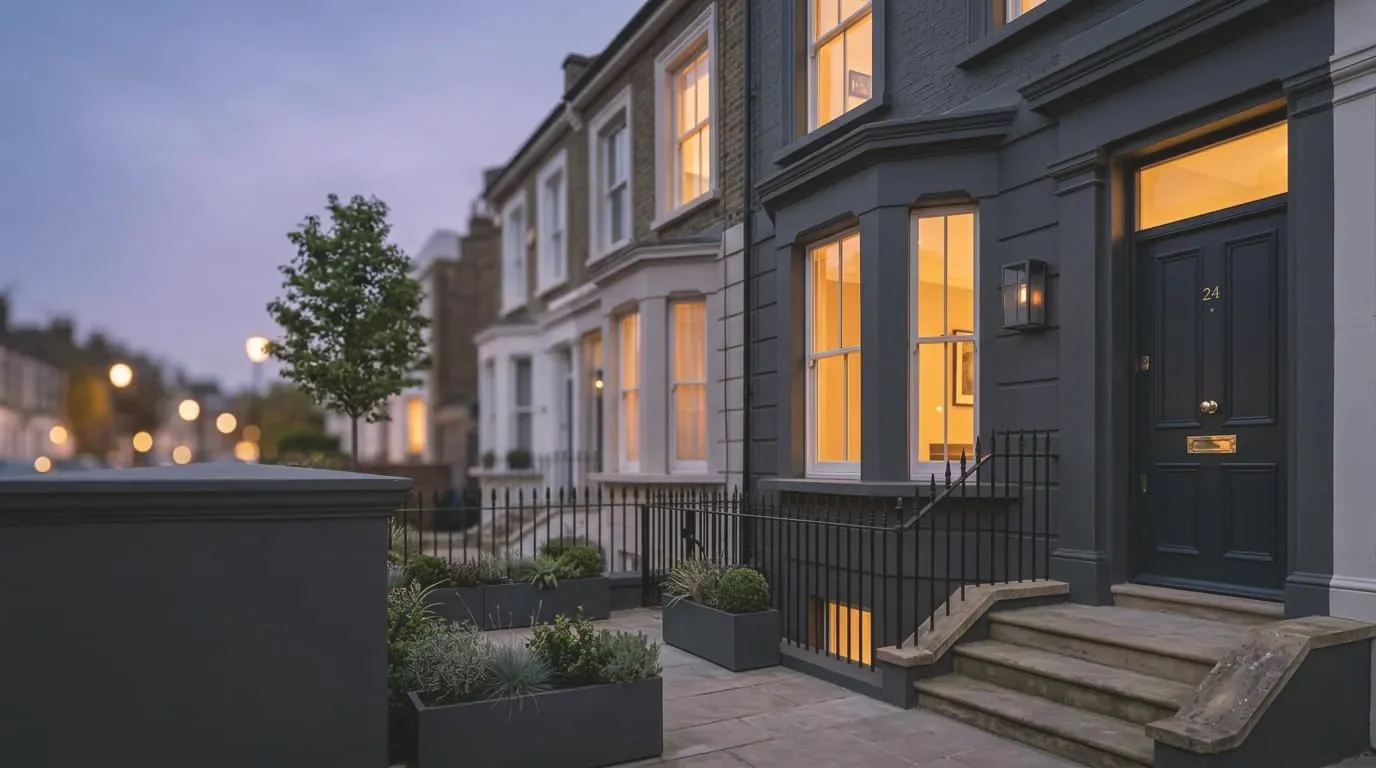
Renovating a London flat is governed by your lease long before any tool comes out — which makes it a different proposition from doing up a house. You don't own the building's fabric; you own a lease on the space inside it, and the walls, the structure, the drainage stack and often the floor below belong to the freeholder. Get the permissions moving early and the job runs; leave them and it stalls halfway through. This guide is built around that reality: the consents you need and how long they take, the four constraints that are unique to flats, and what a complete refit costs by flat size in 2026.
The consents critical path — sort this first
On a flat, the long pole isn't the building work — it's the paperwork, and it has to start before anything else. Plan for three approvals:
- A licence to alter from the freeholder or managing agent. It's a formal, usually solicitor-prepared document spelling out precisely what you're allowed to do and where liability sits. Reckon on four to eight weeks and £500–£1,500 of legal fees — and get it under way as soon as the scope is roughly settled, since it gates the whole job.
- Building Regulations approval, triggered whenever the work touches drainage, electrics, gas or structure, or forms a new habitable space. The contractor handles this through building control or under a competent-person scheme.
- Consent for listed work, where the building carries a listing (grade II or above). Sitting in a conservation area doesn't automatically make a Victorian conversion listed — check with the council rather than assume either way.
Managing agents vary enormously. Some turn requests round quickly; others sit on them for weeks and return queries that suggest the original submission went unread. Build in more time than feels necessary, and chase politely but early.
What generally doesn't need a licence: like-for-like decoration, swapping carpet for equivalent carpet, replacing sanitaryware where it already stands. The moment a job relocates pipework, takes out a wall, switches a floor to a hard finish, or alters drainage, it needs written consent first.
What you can and can't change structurally
In a purpose-built block, internal non-loadbearing partitions can usually come out (with building-control sign-off). In a Victorian or Edwardian conversion, very little is as straightforward as it appears, because the building was never meant to be carved into flats:
- The floorboards under you may be structural to the flat below, and what reads as a stud partition can be carrying the ceiling beneath it.
- Walls shared with neighbours fall under the party-wall rules; notifiable work within six metres of one needs an agreement in place before work begins.
- Opening up to an open-plan layout usually means a steel beam — an engineer's fee of £600–£1,200 plus £2,500–£5,000 or more for fabrication and fitting.
- Lowering a floor to gain ceiling height — a common ask in lower-ground flats — is nearly always refused, because it disturbs shared structure and drainage falls.
The safe assumption with anything that might be structural: don't demolish until an engineer has looked.
The four constraints that are unique to flats
A flat refit lives or dies on four things a house never makes you think about:
- The drainage stack. Your soil pipe is shared, running through several flats, so the WC and waste points can't move without checking the stack and getting the freeholder's blessing — and relocating the stack itself is almost never allowed. Re-planning a bathroom starts here.
- Acoustic floors. Leases nearly always require sound-deadening underlay beneath any hard floor — commonly a stated impact-sound reduction or better — and many insist the managing agent approve the specification in writing first. Keep that spec to hand when you apply; they ask for it.
- Ventilation routes. Extractors have to discharge outside, never into a shared loft or a riser void, and in a mansion block a cooker hood frequently has nowhere to duct — leaving a recirculating unit that deals well with neither moisture nor smell. Pin down the route before you tile or finalise the kitchen.
- Shared structure. The outside walls, the roof and often the floor slab beneath you belong to the building, not to you. Design around them rather than fighting them.
The bathroom in a flat
A bathroom refit is more involved in a flat than in a house, and drainage is the reason. Because the stack is shared, the positions of the WC and the drains are largely fixed; a wet room only works if the floor can be fallen to the existing drain point without eating the height that would encroach on the flat below — and where the slab forbids that, a low-profile tray is the sensible answer. Connections to the bath and shower must be reachable through access panels (something managing agents commonly insist on in writing), and the extractor has to reach outside air. Budget £8,500–£14,500 for a full flat bathroom refit at mid-range spec with full tiling and a heated towel rail, and £2,200–£4,200 more to take it to a wet room.
The kitchen in a flat
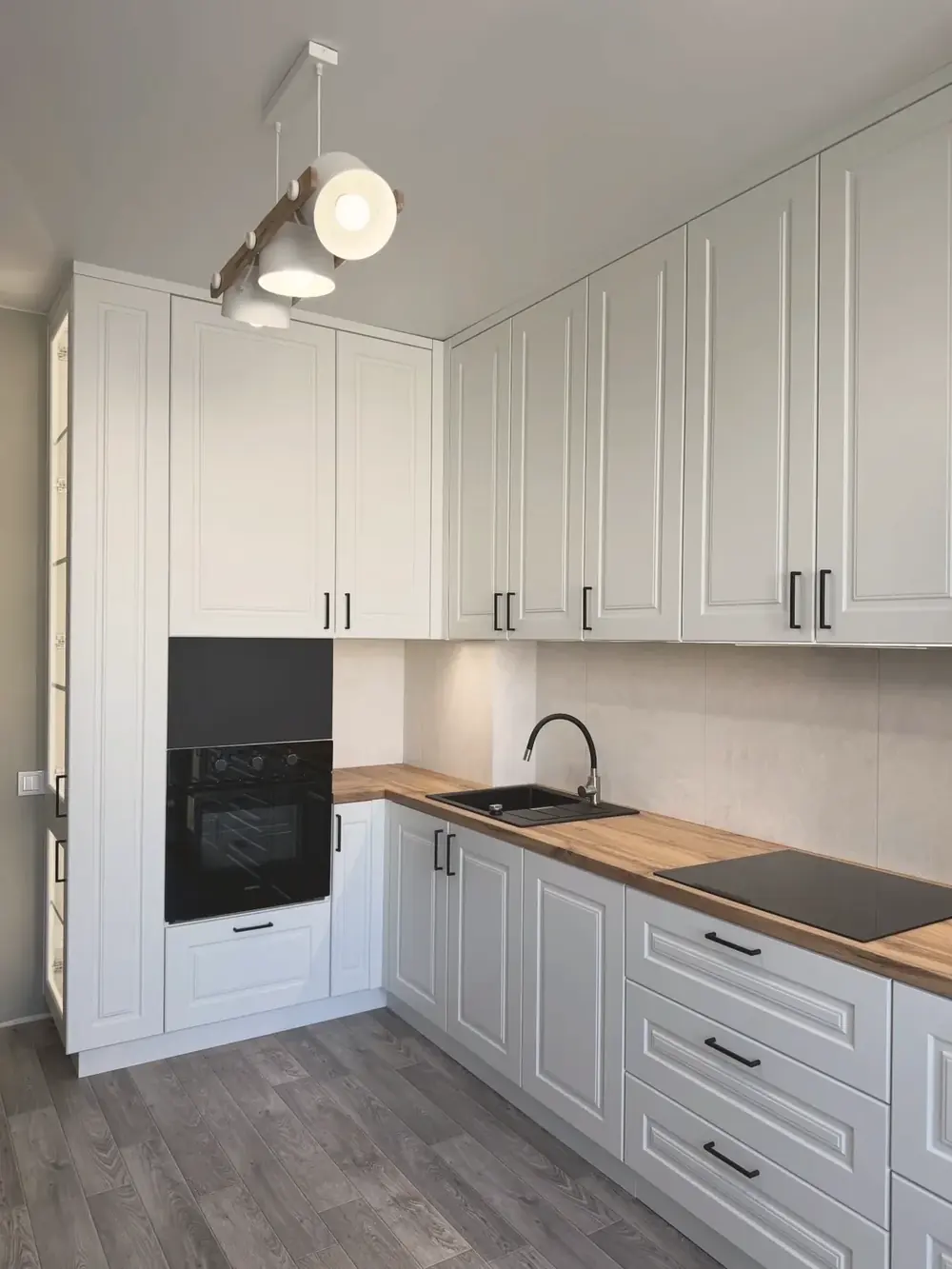
A like-for-like kitchen swap in a flat is usually straightforward; a layout change complicates it fast. Ventilation is the most frequent limit — where there's no external duct route a recirculating hood is often the only option, so build that into the brief. Gas matters too: relocating a gas hob is regulated work that the right registered engineer must do and notify to building control, whereas a move to induction just means capping off the redundant gas supply. Shift the sink more than a metre or so from the existing waste and the run has to be re-routed within the floor or the wall, which calls for the managing agent's consent; and a full refit almost always wants an extra circuit and a dedicated oven supply, which is far cheaper planned at first fix than retrofitted. Reckon on £12,500–£23,000 to fit out a kitchen with mid-range cabinetry and a quartz or solid-surface worktop, trade work included, rising to £23,000–£36,000-plus at higher spec.
Flooring, heating and the rest
On flooring, engineered timber is the usual choice for a London flat — it holds steady through the seasonal movement that would warp solid wood in a heated space, accepts underfloor heating where the maker allows, and looks right, at roughly £62–£112 per square metre supplied and laid. LVT is the practical alternative where budget or acoustics lead, at £36–£66 per square metre, thinner and fully waterproof. Whatever goes down, hold the acoustic-underlay specification ready for the managing agent.
On heating, a full refit is the moment to replace a combi over a decade old, while the pipework and airing cupboard are open and the contractors are already on site — a combi swap in a London flat runs £2,900–£4,700 installed, with a system boiler and unvented cylinder higher. Carpentry, decoration and electrical upgrades round out the scope; on older conversions, add window repairs and period-detail making-good to the list.
Cost by flat size
Here are sensible all-in figures for a complete London flat refit in 2026 — every trade, plus materials and project management, with furniture, appliances and the managing agent's legal fees left out:
- 1-bed (45–55 m²): bathroom £8,500–£12,000, kitchen £12,500–£18,000, LVT throughout £4,200–£7,000, full skim and paint £4,500–£7,000 — a complete refit broadly tracks the £850–£1,950 per square metre whole-home band.
- 2-bed (65–80 m²): add a second reception or bedroom's flooring and decoration, and often a second bathroom or en-suite, lifting the total accordingly.
- 3-bed / larger conversion: scope and the number of wet rooms drive it; price it room by room rather than per square metre once you pass two bathrooms.
Use these to plan; the only firm number comes from a survey, because access, the state of the services and the lease conditions all move it.
Closing CTA
A flat refit succeeds or stalls on the permissions, so the work starts with the lease, not the tiles. PrimeCraft Surface Solutions reads the consents path with you, prepares what the freeholder and building control need, works within the stack, acoustic and structural limits of your block, and prices it to trade level — throughout London and the home counties beyond it. Book a free survey to map the consents and the scope, see what a full renovation covers, or get an early range from the estimator.