Handleless Kitchen Costs: Dartford, Bromley & Sidcup (2026)
Handleless and modern kitchens across the Dartford, Bexley and Bromley corridor: 2026 price tiers from about £22,000 to £110,000+ and a written survey.
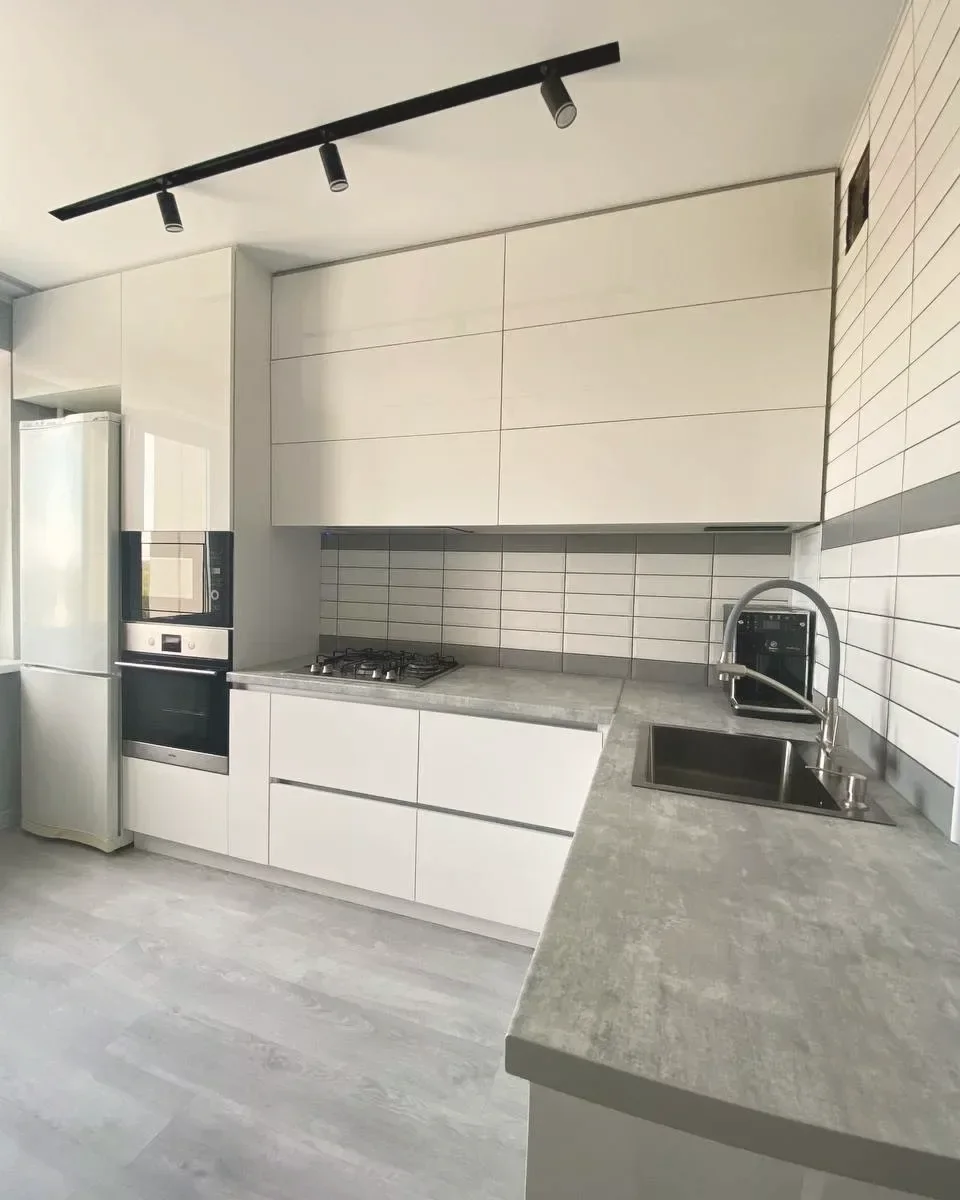
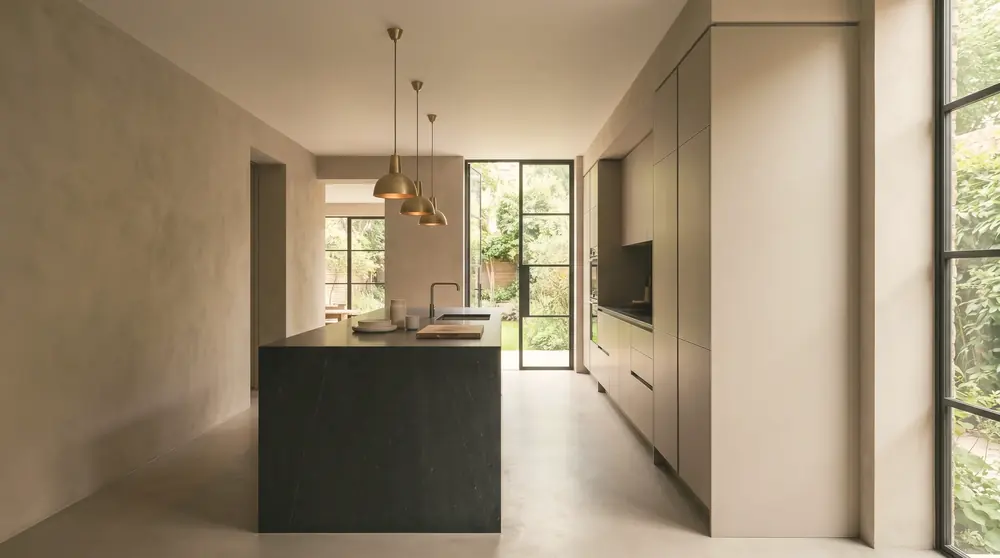
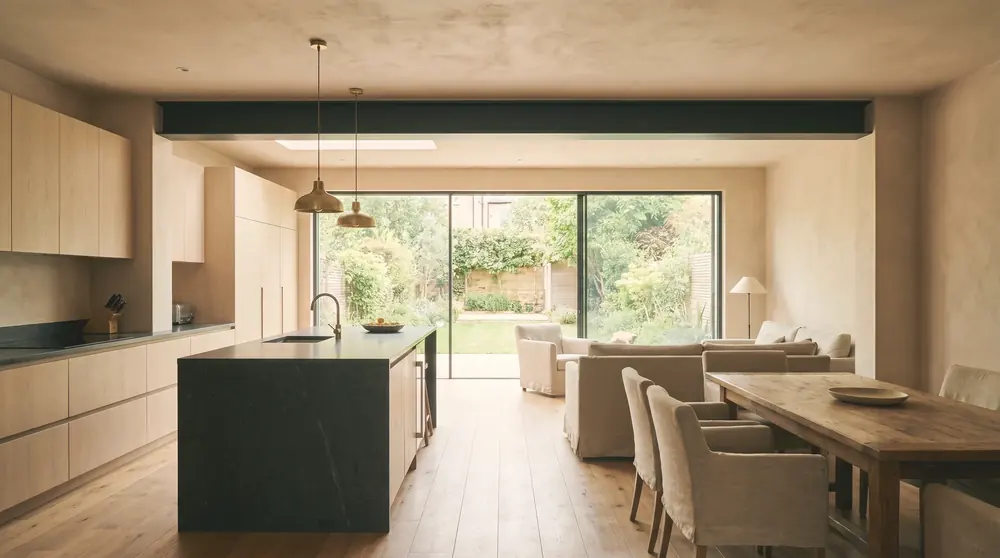
The border where Kent meets south-east London — Dartford, Bexley, Sidcup, Bromley and out towards Orpington — is full of interwar semis, post-war terraces and the odd 1930s bay-fronted house, and the kitchens inside them are being opened up and stripped back to something cleaner. A handleless kitchen is the finish most buyers in this corridor now ask for: flat fronts, no protruding handles, a worktop that reads as a single unbroken plane. This guide explains what "handleless" actually does to the build and the budget, how to choose a worktop that lasts, what a modern kitchen realistically costs here in 2026, and how the island, the lead times and the running order all fit together.
What "handleless" actually means for the build
"Handleless" is a look, but it is delivered three different ways, and each one changes the cabinetry and the price.
True handleless uses a continuous recessed rail — an aluminium channel set behind the top of the door — so you hook your fingers into a shadow gap and pull. It is the most seamless option and the most demanding to fit, because the rail has to run dead straight across every cabinet and the doors have to sit to a fine, even reveal.
J-pull (sometimes called a lip-pull or C-profile) machines the grip straight into the door itself, as a curved lip along the top edge. There is no separate rail to align, so it is a little more forgiving and usually a little cheaper, while still reading as clean and handle-free from a step back.
Push-to-open drops the grip altogether: a sprung catch releases the door or drawer when you press it. It gives the purest slab face of all, but it needs quality mechanisms — cheap catches drift out of adjustment — and it is worth keeping off the sink and bin cabinets, where wet or full hands make a physical pull more practical.
Whichever route you take, handleless generally sits above an equivalent shaker or in-frame kitchen. The doors need tighter tolerances, the carcasses are often drilled and rebated for rails or catches, and there is no handle to disguise a slightly uneven gap, so the fitting has to be more precise. You save the cost of the handles, but you pay for the accuracy — expect a modest premium over the same kitchen in a framed style.
The worktop decision: quartz, marble, porcelain or solid surface
On a handleless kitchen the worktop does a lot of the talking, because there is little else to catch the eye. Four materials cover most briefs in this corridor.
Quartz (engineered stone) is the practical default: a hard, non-porous surface that shrugs off everyday spills and needs no sealing. It comes in consistent colours and convincing marble-effect patterns, and it is the safest choice for a busy family kitchen. It can scorch under a hot pan and it is not indestructible, but for upkeep against looks it is hard to beat. A quartz worktop kitchen in Bromley or Beckenham is, nine times out of ten, quartz for exactly this reason.
Marble is the real thing, and nothing quite matches its depth — but it is porous, it stains from wine, oil and citrus, and it etches where acid touches the polish. Chosen with eyes open, and accepted as a surface that earns a patina, it can be beautiful. Chosen expecting it to stay showroom-perfect, it disappoints.
Porcelain is the newer contender: fired sheets that resist heat, scratches and UV, and that can be cut to very thin edges for a crisp, modern profile. It suits an ultra-slim worktop and takes an outdoor kitchen in its stride. The trade-off is that thin porcelain needs skilled handling and careful support during fitting.
Solid surface (acrylic composites such as Corian) can be thermoformed and joined with invisible seams, which lets a run of worktop, upstand and integrated sink read as one continuous piece. It is warm to the touch and repairable, though it is softer than stone and less heat-tolerant.
As a rough steer, laminate sits at the bottom of the budget, quartz and solid surface occupy the middle, and premium porcelain and natural marble sit at the top. Which is right depends less on price than on how you actually cook and clean.
2026 price tiers for a Dartford, Bexley and Bromley kitchen
The housing stock along this border is mostly two- and three-bed semis and terraces, which keeps kitchen footprints sensible and the tiers predictable. These are 2026 figures for materials and labour together, and every one is confirmed at survey rather than quoted blind:
- Like-for-like refit — around £22,000 to £30,000. New handleless or J-pull units in the existing layout, engineered-stone or quality laminate worktops, mainstream integrated appliances, the current floor kept or refreshed. The quickest route to a modern kitchen, and the right call for a sound room you simply want renewed.
- Full refit with a new layout — around £30,000 to £49,000. Moving the sink, hob and runs, re-plumbing and re-wiring to suit, better appliances, proper task and plinth lighting, new flooring throughout. This is where most households land when the old layout never quite worked.
- Design-led handleless kitchen with stone worktops and an island — around £49,000 to £110,000 and up. True recessed-rail cabinetry, natural stone or premium porcelain, an island with power and often water, a ducted extractor, and frequently a structural opening into the next room. The ceiling here is set by the brief, not the house.
These bands sit within the wider picture in our London kitchen renovation cost guide, which explains the two decisions — cabinetry and layout — that move the number most. For a written figure against your own room, our kitchen fitting service starts with a survey.
The island question
An island is the single change that most often tips a kitchen from the middle tier into the top one, and it is worth understanding why before you commit.
The island itself is joinery, but what runs to it is where the cost and disruption live. Power for sockets, or for a hob or downdraft, means a new circuit chased under the floor. Water and waste for a prep sink means running supply and a drain to the middle of the room, which in a solid ground floor can mean lifting and re-laying part of the slab. Extraction is the trickiest: a hob on an island needs either a ceiling extractor ducted out through the structure or a downdraft unit, and both have to be planned before the floor closes up.
None of this is exotic, but all of it has to be designed in at first fix. Deciding you want a socket, a tap or a hob on the island after the floor is down is the kind of change that costs real money to undo — so it is settled on paper first. Opening the kitchen into a dining or living space to make room for an island is a project in its own right; our walkthrough of a kitchen refit where we took a wall out shows what that actually involves.
Modern kitchens we have fitted nearby
We have completed a run of modern kitchens across this corridor, and it is fair to say they lean towards the slab-front, handleless look — clean doors, quiet colours and a worktop left to do the work. A few recent ones:
- Dartford (DA1) — a white gloss kitchen with concrete-effect worktops, fitted in spring 2025. Cool, bright and low-fuss, with the matt worktop grounding the reflective doors.
- Sidcup (DA14) — a monochrome kitchen with charcoal worktops, spring 2025. A darker, more graphic take on the same handleless language.
- Bromley (BR1) — a white kitchen with marble and brushed brass, autumn 2024. The warmest of the set, where the brass and the veining soften the flat fronts.
- Beckenham (BR3) — a monochrome kitchen built around a black stone island, spring 2026. The island carries the room, with the perimeter kept deliberately plain.
- Orpington (BR6) — a dark, modern kitchen with an island, summer 2025. Confident and low-lit, and a good example of an island planned in from the very start.
You can see these and the rest of our work in the project gallery. If you are nearer the south-London edge of the corridor, our pages for Beckenham and Orpington set out how we cover those areas; towards the river, Bexley sits within the same patch.
Lead times and the running order
A modern kitchen is a sequence, and the parts that make it look effortless are the parts that need the most lead time. Slab and handleless doors are typically four to ten weeks from order, because they are made to size and finish rather than pulled from stock. Stone and porcelain worktops cannot be ordered from a plan at all: the units go in first, the worktop is templated off the fitted cabinets, and the stone is then cut and returned in roughly one to two weeks — which means a short spell with a temporary top while the real one is made.
Around that spine sits the rest of the run: strip-out, any structural or plumbing changes, first-fix electrics and pipework, plastering, cabinet fitting, templating, worktop and splashback, appliances, second-fix and snagging. On a straightforward refit the on-site work is usually two to four weeks; a layout change or an island adds to both the on-site time and the lead time. We fix the full specification — doors, worktop, appliances, handles or catches — before anyone lifts a tool, so nothing is waiting on a late decision and the programme holds.
Common questions
How much does a handleless kitchen cost in 2026? A handleless kitchen typically runs from about £22,000 to £30,000 for a like-for-like refit, £30,000 to £49,000 when the layout changes, and £49,000 to £110,000 or more for a design-led fit with stone worktops and an island. Prices are confirmed at survey, once your room, spec and services are measured.
Is a handleless kitchen more expensive than a shaker kitchen? Usually, yes, though the gap is smaller than people expect. Handleless doors need engineered recessed rails, precise machining and tighter tolerances, which adds to the cabinetry price. You save the cost of the handles themselves, but the extra fitting accuracy and the slab or J-pull fronts tend to place handleless above an equivalent shaker kitchen.
Which worktop is best for a modern kitchen: quartz, marble or porcelain? Quartz is the practical all-rounder: hard, non-porous and low-maintenance. Marble looks unmatched but stains and etches, so it suits owners happy to accept a patina. Porcelain resists heat and scratches and works well for ultra-thin edges. Solid surface allows seamless joins and integrated sinks. The right choice depends on how you cook and clean.
Do you fit kitchens in Dartford, Sidcup and Bromley? Yes. We work across the Dartford, Bexley and Bromley corridor, including Sidcup, Beckenham and Orpington, alongside the rest of Greater London and the bordering counties. Recent kitchens include projects in Dartford, Sidcup, Bromley, Beckenham and Orpington. You can see examples of our finished work in the project gallery.
How long does a kitchen installation take? Most kitchen fits run two to four weeks on site once materials have arrived, though bespoke handleless cabinetry and stone worktops carry lead times of their own. Slab and handleless doors are often four to ten weeks from order, and stone is templated only after the units are fitted, then cut in roughly one to two weeks.
Book a kitchen survey
A handleless kitchen turns on details a phone call cannot see: how square the room is, where the services run, what the floor is built on, and whether an island is worth the groundwork. PrimeCraft Surface Solutions surveys the space in person, talks through the door style, the worktop and the layout, then returns a written quote broken down so you can see where every pound sits and trim any line you want to. We cover Dartford, Bexley, Bromley and the wider corridor, alongside the rest of Greater London and the bordering counties, and we carry £10m employer's and £5m public liability cover. Book a survey through our estimate page, see what a PrimeCraft kitchen includes, or call us on +44 20 4652 0005.