Renovating a Victorian house in London (2026): the survey to do before you budget
On Victorian and Edwardian London stock the budget-killer is what you did not find. A pre-commitment survey, the red flags, and fix costs.

Most of London's houses went up between roughly 1850 and 1910, so the typical London renovation is a job on Victorian or Edwardian stock — and the thing that wrecks its budget is almost always something nobody looked for before the money was committed. The fix is a proper survey of the bones first: the supply pipes, the wiring, the plaster, the damp, the timber and the roof, each checked for tell-tale signs before a budget is set in stone. This guide is that survey, element by element — what to look for, what it means, and what putting it right costs in 2026 — followed by what to keep rather than rip out, and how a fair quote prices the things that only show themselves once you open the walls.
Before the budget: walk the bones, element by element
Run each of these checks — ideally with a builder or surveyor alongside — before you fix a figure. Any one of them can move a budget by five figures, so finding them now is far cheaper than meeting them in week six.
Incoming and internal pipework. A grey, soft incoming main that marks silver when scratched and dents under a thumbnail is lead. The water company replaces its side; yours is yours, at roughly £600–£1,500 to convert to copper or MDPE. Internal runs of corroding galvanised steel or cast iron give brown water and fail from within — if you see them, plan to replace the lot, because patching buys only months.
Plaster and ceilings. Most ceilings in pre-1930 houses are lath-and-plaster — lime plaster keyed onto thin timber laths. Sound ones are worth keeping; they outperform modern board on fire and sound. But a ceiling that bows, sags or sounds hollow when tapped has lost its keys and will eventually drop in lumps. Full replacement — strip, board, skim, cornice re-formed — runs about £75–£125 per square metre.
Damp at the base of the walls. Victorian houses sit on slate or bitumen damp-proof courses that have usually given up. Watch for tide-marks up to about a metre on ground-floor walls, salty white bloom, and skirtings peeling. Check the external render too: where it carries down past the line of slate visible in the brickwork, it bridges the course and lets damp track in sideways. The honest repair is to strip the internal plaster to brick and re-line in lime or a proper tanking system; the quick injection-and-gypsum version satisfies a mortgage survey and tends to fail again within a decade.
Timber and rot. Look at every exposed timber. Localised, dark, crumbly decay around a leak is wet rot — bad but contained. Fluffy white growth, rust-coloured spore dust and timber cracking into cubes is dry rot, which travels through brick and plaster well beyond the original leak and needs specialist eradication; budget £3,000–£15,000 and up depending on how far it has run.
Electrics. Hard, cracking rubber-sheathed cable, round-pin sockets, or a wooden board with ceramic fuses all mean a full rewire — about £5,500–£9,000 for a three-bed terrace, more with smart controls. It involves a lot of chasing into walls, so it has to happen early, before the plastering, not after.
The roof. Original Welsh slate lasts a century or more; the iron nails holding it don't, corroding after eighty to a hundred and twenty years so the slates begin to slip — the trade calls it nail sickness. A roof never stripped and re-nailed within that window will need it — figure on £8,000–£18,000 for a terrace of average size, and more where the profile is a mansard.
The order that means you only fix things once
The classic Victorian-renovation mistake is to decorate, then discover the damp, then decorate again. Sequenced properly you touch each thing once:
- Survey the structure and the damp first, so the budget is built on facts.
- Strip out the worn-out fabric — old kitchen, bathroom, failed plaster, carpets.
- Make the building watertight from the top down: roof, chimneys, gutters, flashings.
- Deal with damp at the base — external render, the damp course, any tanking, drainage and ventilation.
- Renew the hidden services: rewire, replumb, new heating, while the walls are open.
- Fit the new kitchen and bathrooms.
- Plaster and decorate.
- Restore the floors and joinery, and finish the final fit-off.
Follow that sequence and your work stays done; get ahead of it and you end up ripping out finishes you've only just paid for.
Listed buildings and conservation areas
Large parts of inner London are either listed or sit inside a conservation area, and the difference matters. If the house is listed — any grade — then altering its character needs listed building consent, and that reaches surprisingly far: windows, internal walls, doors, even some paint decisions can require sign-off, and unauthorised work is a criminal matter. In a conservation area the controls are on the exterior: windows, doors, render, roof coverings and sometimes colours fall under the council's eye, while the interior is generally free unless the house is also listed. The practical line: don't swap timber sashes for plastic, don't skim over original mouldings, and don't repaint a street-facing front in a non-approved colour without checking — councils do enforce.
Keep these — they're where the value lives
A Victorian house is worth more with its original features intact, so the default should be restore, not replace:
- Plaster mouldings — cornices, ceiling roses, picture rails, skirtings and architraves. These are much of what makes the house special; protect them through the works.
- Panelled internal doors. Strip the old paint back properly and rehang on sound hinges rather than skipping them for flat modern replacements.
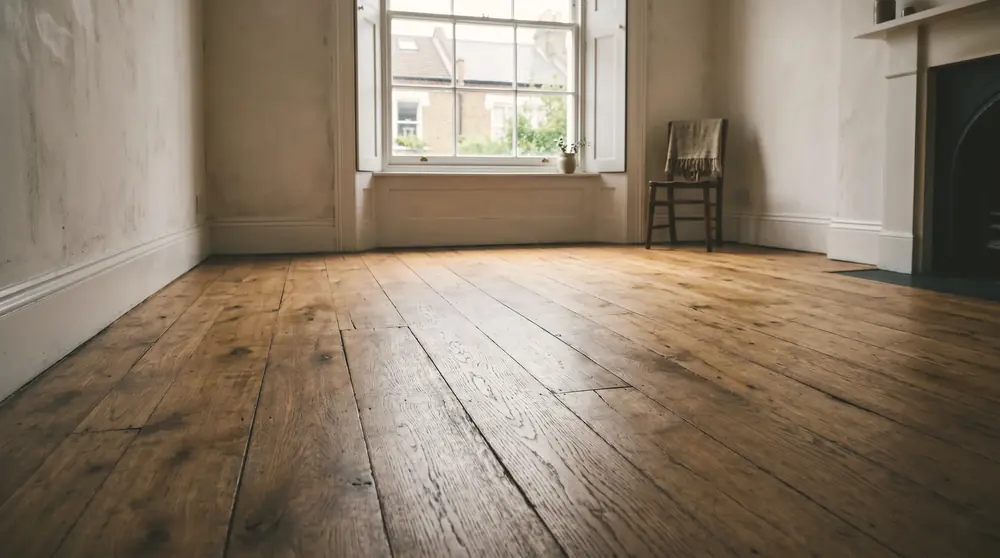
- Floorboards, usually pine or pitch pine. Lift, repair, sand and finish — about £35–£60 per square metre, and worth every pound.
- Fireplaces and hearths, working or not — they ground a room, so resist boarding them over.
- Timber sash windows. Properly overhauled and draught-proofed (roughly £700–£1,500 a window), they hold their own against replacements on both character and longevity, and on a controlled elevation they're often the only compliant option anyway.
How a fair quote handles the unknowns
The honest truth about a period renovation is that no one can price with total certainty what's behind sound-looking plaster. So a fair quote does two things. It carries a clearly stated contingency — for a London project past £100,000, holding back 15–20% specifically for what the survey couldn't see is sensible — and it commits to putting any genuine discovery in front of you, costed, for a decision before the work proceeds, never as a line that surfaces on the final bill. A refurbishment asbestos survey on a pre-2000 house (£250–£700) and a candid damp assessment belong in the plan from the outset, priced as line items, so they're decisions rather than mid-job ambushes. Where a Victorian house is taken back to the brick throughout, the whole-house budget lands in the same £850–£1,950 per square metre band as any full London renovation — the period factors push you up that band rather than off it.
Closing CTA
A Victorian house can't be costed off a floor plan — the real price hides in the walls and beneath the floorboards. PrimeCraft Surface Solutions surveys the structure and the suspect spots first, prices the work to trade level with the contingency stated plainly, and runs the job in the right order through one point of contact, working across the capital and the counties that ring it. Book a free survey to start with the bones, see what a full period renovation covers, then lean on the online estimator for an early planning figure.