How to get planning permission in London: a homeowner's guide (2026)
Do you even need planning permission? The three routes, the step-by-step process, how long it takes in London, and why applications fail.
Plenty of home projects in London need no planning permission at all — they're covered by permitted development — so the first job is working out which side of that line you fall on before you spend on anything. When you do need to apply, a householder application currently costs £258 in England, the council's target for a decision is 8 weeks, and roughly four in five householder applications are approved nationally (a little lower across London). This guide walks the whole path: whether you need permission, the three routes, the step-by-step, how long it takes, and why applications get refused.
Do you even need permission?
Many internal alterations and a fair number of extensions and loft conversions sit within permitted development, which lets you build without a full application provided you stay inside the limits — on size, height, position relative to the front of the house, and materials. Internal works that don't change the outside generally need no planning permission at all (though they may still need Building Regulations — see below).
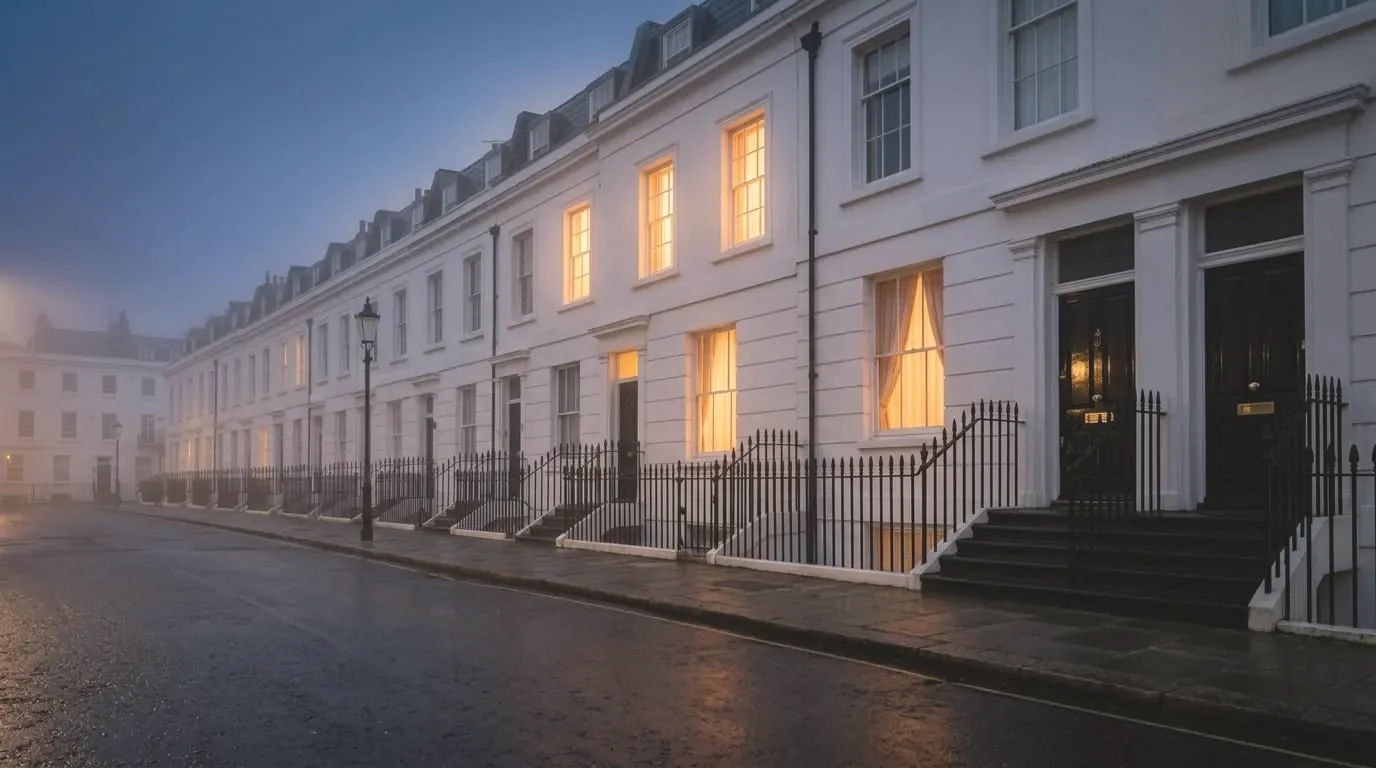
What permitted development does not cover: flats and maisonettes (which have no such rights), anything that breaches the size or height limits, work to a listed building, and — crucially in London — properties where the borough has withdrawn permitted-development rights. A conservation area or an Article 4 direction does exactly that, and between them they cover a large slice of inner London's period streets. Check your address on your borough's planning portal before assuming anything.
The three routes
There are three ways a London home project gets its planning green light:
- Permitted development — no application, provided you stay within the limits. For certainty (and for a smoother sale later) you can confirm it with a lawful development certificate, currently £103.
- Prior approval — a lighter-touch process for certain larger single-storey rear extensions, where the council checks the impact on neighbours and decides within a set period rather than running a full assessment. Cheaper and quicker than full planning, but it can still be refused.
- Full planning permission — required for listed buildings, anything in a conservation area that affects the exterior, two-storey and roofline-changing work like a mansard, and any scheme that exceeds permitted-development limits or where those rights have been removed. The householder fee is £258; larger or change-of-use applications start from £578.
Step by step, from idea to decision
The path most householders follow:
- Settle a rough design and confirm your planning route (we run this check as part of quoting).
- If an application is needed, your architect or planning consultant prepares drawings and the supporting statements.
- The application is submitted through the national planning portal, with the fee.
- The council validates it, publishes it, and consults neighbours and any relevant bodies.
- A case officer assesses it against local and national policy and issues a decision — or, on contested schemes, refers it to a planning committee.
- You receive a decision notice. If it's an approval, it usually carries conditions you must discharge before or during the build.
Keep your neighbours informed early. A neighbour who first hears about your plans through a council consultation letter is far more likely to object than one you spoke to beforehand.
How long it takes in London
The statutory target is 8 weeks for a householder application and 13 weeks for a major one. In practice, inner-London boroughs often run beyond the 8-week target, and a scheme that goes to committee or sits in a conservation area can add several weeks more. Prior-approval applications are determined inside their own fixed window, which is shorter. Build the determination time into your programme — and never let a builder start on site before consents are granted in writing.
Why applications get refused — and how to avoid it
Most refusals come down to a short list of issues: overdevelopment of the plot, loss of light or privacy to neighbours, harm to the character of a conservation area, out-of-keeping materials or proportions, or a design that ignores the rhythm of the street. The fixes are mostly about design discipline — matching materials, respecting the building line, keeping windows in proportion — and about evidence. On a contested street, an application that cites nearby approved precedents for the same kind of work stands a much better chance. A refusal isn't fatal: you can revise and resubmit, or appeal, but both cost months, so it's worth getting the first submission right.
What your builder should — and shouldn't — be doing
A builder's job in the planning phase is to advise on what's buildable and to flag the practical constraints, not to act as your planning consultant unless they genuinely have that expertise. What a good builder does: run a free desk check on your permitted-development position, work with an architectural partner where drawings and an application are needed, and refuse to start on site until consents and Building Regulations approval are in hand. What a good builder won't do: tell you to "build it and sort the paperwork later," or treat planning as someone else's problem. We manage the application and the Building Control process on your behalf when they're needed, so the paperwork and the build stay joined up.
Don't forget Building Regulations
Planning permission and Building Regulations are two separate approvals, and confusing them is a common and expensive mistake. Planning governs whether you can build and what it looks like. Building Regulations govern how it's built — structure, fire safety, insulation, drainage, electrics, ventilation and glazing. Most structural, electrical and plumbing work needs Building Regulations sign-off even when no planning application is required, and the completion certificate is something a buyer's solicitor will ask for. Budget for both, and make sure your builder is arranging the Building Control inspections at the right stages.
Is pre-application advice worth paying for?
Often, yes — especially on anything sensitive or borderline. For a fee that varies by borough (typically a few hundred pounds, more in central London), the council gives written feedback on your proposal before you submit. On a conservation-area scheme or an ambitious extension, that early steer can be the difference between an approval and a wasted application and a lost few months. On a straightforward project clearly within permitted development, a lawful development certificate is usually the more useful spend.
Closing CTA
PrimeCraft Surface Solutions checks your planning position as part of every quote, works with an architectural partner where an application is needed, and manages planning and Building Control on your behalf as part of a full renovation — across London and the surrounding Home Counties. Book a free site visit and we'll tell you what you can build, by which route, before you commit to drawings. Where a neighbour's wall is involved, the Party Wall Act guide covers the notices that run alongside it.