Basement conversion cost in London (2026): is your house even a candidate?
Before the cost, a go/no-go test for a London basement conversion — then 2026 prices for full-dig, slab-lowering and tanking, and who does what on the job.
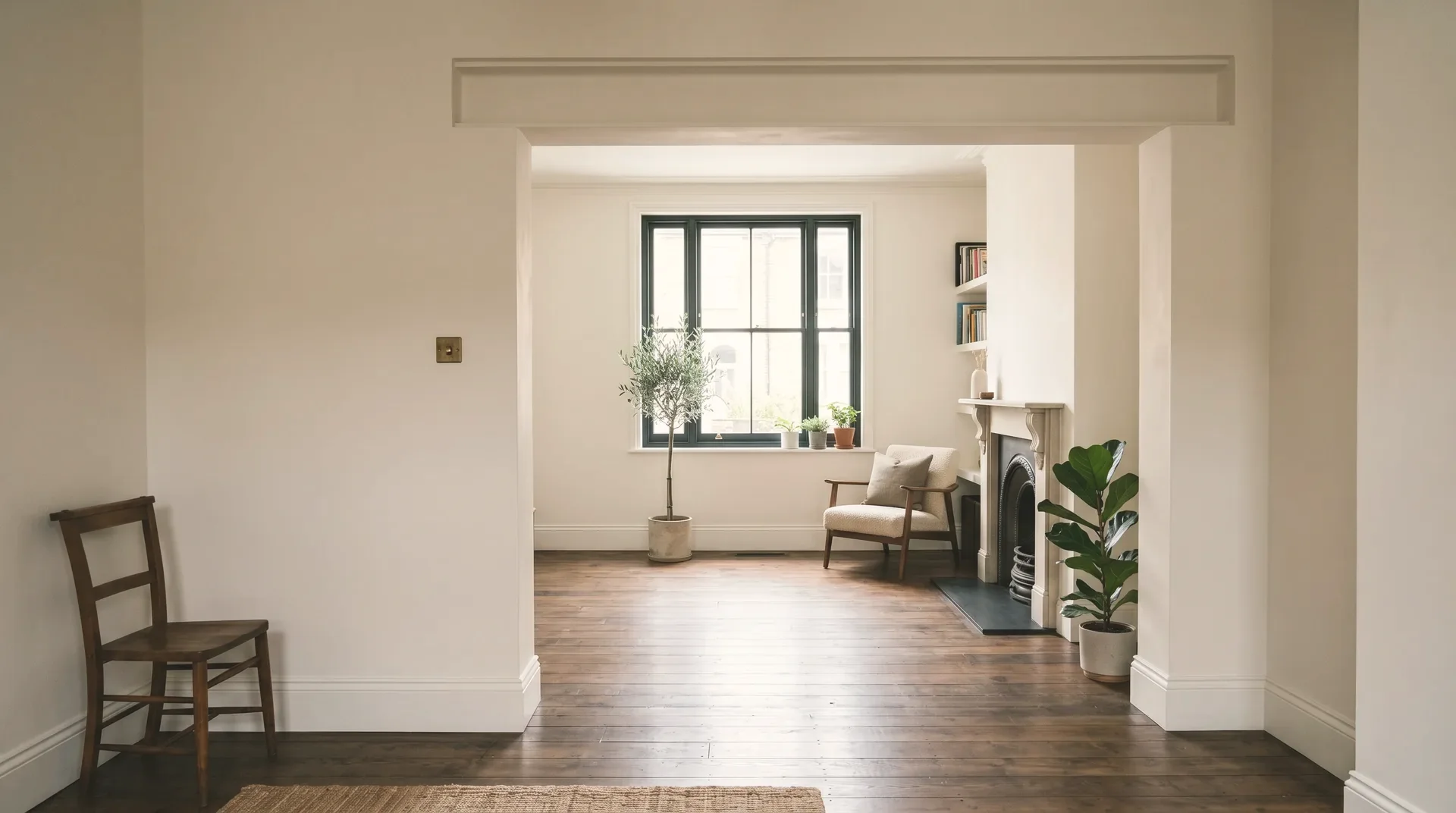
A full-dig basement is the most demanding thing you can do to a London house, and the cost says so: £3,500–£6,000 per square metre for the structure, waterproofing and basic fit-out, which works out at £175,000–£300,000 for a 50 m² basement under a typical terrace before you furnish it. Numbers like that mean the first question isn't "how much?" but "is my house even a sensible candidate?" This guide gives you a five-point go/no-go test first, then the real costs, then who you actually need on the job — including where a specialist digs and a main contractor manages.
First: the go/no-go candidate test
Run your property through these five before you spend anything on design. If two or more come back red, the project may not pay or may not be feasible:
- Value headroom. A basement adds an estimated £80,000–£250,000 to a prime central London home (Knight Frank's prime-stock research), which works on a £2m-plus terrace and often doesn't in outer-zone suburbia. If the added value won't clear the build cost in your postcode, stop here.
- Your borough. Camden, Westminster and the Royal Borough of Kensington and Chelsea each demand a Basements Impact Assessment alongside the planning application, and most other boroughs now cap basements at a single storey and forbid them under most of the garden. Some streets are effectively off-limits.
- Ground and water. London sits on clay over Thanet sand over chalk. Near the Thames or a former watercourse — much of west and south London — high groundwater makes a dig far harder and may need dewatering. A pre-contract trial pit (£800–£1,500) answers this cheaply.
- Neighbours. A full dig almost always triggers party-wall notices on both adjoining owners, and a combative neighbour's surveyor can add months. If relations are already poor, factor that in.
- Patience. Expect 10–18 months from first design to sign-off, and longer in the restricted boroughs. This is not a project for a tight deadline.
What "basement conversion" really means (four different jobs)
The phrase covers four jobs with very different budgets and risks, so be clear which one you're costing:
- A new full dig excavates ground beneath the house to create a level that doesn't exist. It needs the existing foundations underpinned, the structure above temporarily propped, a new waterproofed concrete box, and the ground floor reinstated. The most expensive and complex type: £3,500–£6,000 per m² for structure, waterproofing and basic services.
- Lowering an existing slab deepens a semi-basement that lacks head height (often only 1.8–2.0 m, below the 2.2–2.4 m wanted for habitable use). Cheaper but still structural, because changing the slab level changes how the surrounding walls bear: £1,800–£3,050 per m² for a 600 mm drop.
- Converting an existing basement that already functions — often a 1960s-to-90s job done without proper waterproofing — means upgrading the waterproofing, services and finish: £850–£1,950 per m² by condition.
- A lightwell adds or enlarges a front or rear well for light and air, with retaining walls and drainage: £15,000–£35,000 on a standard terrace front.
Location moves the price even within London
For a full new dig in 2026:
- Prime central postcodes (think Mayfair, Chelsea, Belgravia and the Kensington squares): £4,500–£6,000 per m². Constrained sites, nowhere to put spoil, narrow-street deliveries, the stricter planning regime, and the calibre of team these projects demand all push the rate up.
- The inner boroughs — Wandsworth, Southwark, Lambeth, Hackney and Islington among them: £3,500–£4,800 per m². Similar engineering, easier access.
- Outer London: £3,000–£4,200 per m². Better access and logistics, the same structural requirements.
These cover construction only. Set aside a further £20,000–£50,000 for the professional fees — covered below — depending on complexity.
Waterproofing — the decision that fails projects when it's got wrong
Waterproofing a below-ground room isn't a single product. BS 8102 sets out three approaches, and for habitable use the standard is to combine them:
- Type A, a barrier (tanking) applied to the structure. Effective on a sound, well-prepared surface, but vulnerable to any future movement — not adequate on its own for a habitable basement in London clay.
- Type B, waterproofing built into the concrete itself with admixtures and waterstops. Durable, though it lives or dies on the quality of the pour.
- Type C, a drained cavity membrane (Newton, Wykamol, Delta) against the inner face, channelling any water to a sump and pump. This is the dominant London system, because it manages water rather than pretending to stop it.
For a habitable London basement the proper specification pairs Type B with Type C — a waterproof concrete box plus an inner drained cavity vented to a sump — which is what warranty providers require for a ten-year guarantee. Tanking alone is cheaper (£80–£150 per m² against £180–£300 for a Type C system) and that's exactly why a corner-cutting quote uses it for a habitable space. Specifying it for a habitable room is the classic, expensive mistake on London basements; whichever system goes in, insist on an accredited installer.
Party wall: it applies to almost every dig
Section 6 of the Party Wall Act 1996 bites once you dig within 3 metres of a neighbour's structure and go below the level of their foundations — which describes nearly every full-dig basement. You serve notice, the neighbour has a fortnight to agree or object, and an objection (common on basements) means a formal award settled between appointed surveyors.
Set aside £1,500–£3,500 for each adjoining owner's surveyor — on a mid-terrace with two neighbours that's £3,000–£7,000 out of your pocket whether or not they contribute. Most awards now also require crack monitors, settlement gauges and a condition survey of the neighbouring properties before and during the dig, adding £3,000–£8,000 for the monitoring programme.
Who you actually need — and what PSS does on a basement
A full-dig basement isn't a job for a single general builder. At minimum you'll need: a planning consultant for the restricted boroughs; an architect for the design and application; a chartered structural engineer for the underpinning, temporary works and permanent structure; an independent waterproofing designer; a party-wall surveyor; and Building Control. Those fees are the framework that makes the job legal, insurable and safe — not optional extras.
We're straight about our role. A new full dig under an occupied London terrace needs a specialist underpinning-and-waterproofing contractor as the principal subcontractor — a firm that does little else, with its own crews and accreditations. Where PrimeCraft Surface Solutions adds value is running everything around that dig: the renovation above ground, the fit-out, the new kitchen, the bathrooms and the services across the rest of the house, plus the coordination of the specialist alongside every other trade on one programme. We're also the right call to convert an existing semi-basement properly, lower a slab, or add a lightwell. Every quote is broken out so you can see what your main contractor charges and what's being subcontracted.
The risks that sink basement projects
Four things blow basement budgets and timelines, and all four are foreseeable:
- Groundwater near the Thames or an old watercourse, needing dewatering that adds weeks and cost.
- A combative adjoining owner whose surveyor demands unreasonable conditions, adding two to six months.
- Unforeseen ground — old drains, Victorian wells, buried timber, contaminated soil. The trial pit (£800–£1,500) is cheap insurance against this.
- Rushed concrete. A properly specified basement mix needs its full 28-day cure before loading; rushing it is what causes the waterproofing failures that surface three to five years later.
And the cost that outlives the build: a Type C system runs a sump pump every single day for as long as the house stands. Plan from day one to service it yearly (£150–£300) and to replace the pump itself on a 7-to-12-year cycle (allow £600–£1,500 each time).
Closing CTA
If your house clears the candidate test, the next step is a short site visit from a builder who has worked on London basements — half an hour on site tells you more about viability than hours of reading, and saves you committing to architect and engineer fees on a project that was never going to work. PrimeCraft Surface Solutions will give you an honest read, manage the job around any specialist dig, and quote it broken out to trade level — across London and the surrounding Home Counties. Book a free assessment, see what a full structural renovation involves, or try the online estimator to get a first range.